

Blog
Insights
From Bulk Spirit to Global Brand: Lessons from Diageo's Global Expansion

Craig Wallace shares how Diageo builds globally successful spirits through quality, consistency, local insight and long-term innovation.
For many spirits producers, entering a new market is often viewed through the lens of sales, distribution, and marketing. But according to Craig Wallace, Whisky Creation Leader and Master Blender at Diageo, commercial success begins much earlier.
Having worked on projects ranging from training blending teams in India to helping establish Yun Tuo, Diageo's Chinese malt whisky distillery, Wallace has seen first-hand that building successful brands across international markets requires far more than exporting great whisky. It demands an understanding of consumers, culture, production systems, quality management and long-term brand stewardship.

Image: Craig Wallace at Yuntuo.
Ahead of his session at the International Bulk Wine & Spirits Show UK, Wallace shares why creating winning products is as much about process and partnerships as it is about flavour.
When producers talk about international expansion, conversations usually revolve around routes to market, distributors and brand positioning.
Craig Wallace believes the real work begins much further upstream.
Having spent years helping develop Diageo's whisky operations in markets including India and China, Wallace has learned that creating products capable of succeeding internationally requires understanding local consumers long before the first bottle reaches the shelf.
"The key areas when working with a new market are understanding the consumer and the culture to deliver the best-quality product for that market."
For producers supplying bulk spirits, that observation is particularly relevant. Success isn't simply about delivering excellent liquid. It is about ensuring that every stage of production, transport, blending and bottling protects both quality and brand reputation.
Behind every successful market launch sits an enormous amount of technical work that consumers rarely see.
Wallace points to regulatory compliance with both Scotch Whisky Association requirements and local legislation, alongside filtration systems, bottling operations, sensory accreditation and quality management as critical parts of building a successful supply chain.
These activities may happen behind the scenes, but they determine whether brands can consistently deliver the experience consumers expect.
"These are areas that all happen in the background to protect the quality of our historic and new brands alike."
His work in China offers another important lesson.
Rather than simply exporting centuries of Scotch production knowledge, Wallace believes successful international projects should balance global expertise with local identity.
When supporting Yun Tuo, Diageo's Chinese malt whisky distillery in Yunnan Province, his objective wasn't to recreate Scotland.
It was to help create something authentically Chinese.
"The aim has always been to make a truly Chinese Malt Whisky that reflects the local culture, terroir and people."
Although Diageo brings more than two centuries of whisky-making expertise, Wallace says his role has been to mentor local teams rather than impose traditional Scotch methods.
"I want to use my experience to mentor and guide a new group of talented whisky makers that allow the Yunnan province terroir to shine through."
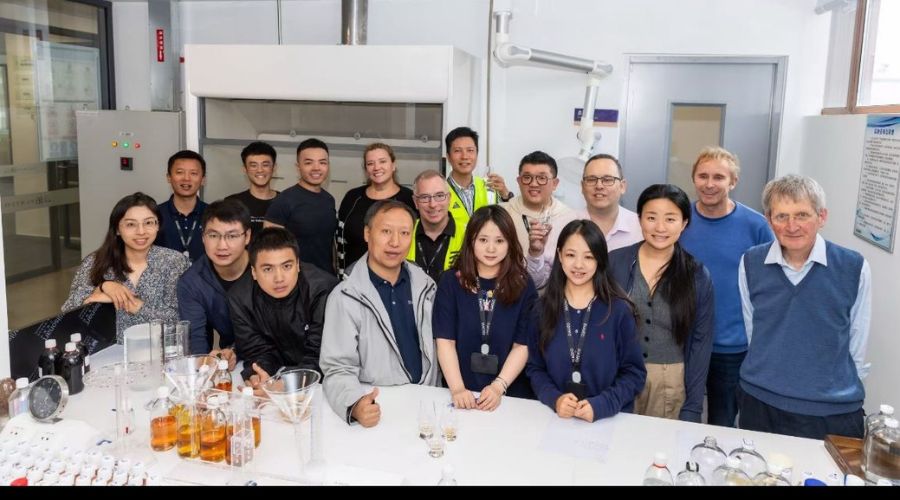
Image: Craig Wallace working with the local whisky makers at Yuntuo.
That philosophy reflects a broader shift taking place across premium spirits. Rather than copying successful products from established markets, producers are increasingly creating brands that combine international expertise with regional authenticity.
Innovation follows the same commercially disciplined mindset.
Whether experimenting with new distillates or developing liquid platforms such as Johnnie Walker High Rye, Wallace says creativity can never exist in isolation from commercial reality.
Every innovation begins by considering both consumers and long-term market trends.
Because Scotch requires years of maturation, new liquids are continually assessed throughout their ageing journey before decisions are made about scaling production.
"I sample the innovations during this time to check progress and ensure we bottle at the perfect moment."
Even at the earliest stages of experimentation, Wallace is already thinking beyond flavour.
"If things are moving well flavour-wise and still fit with current consumer preference, I would decide to repeat and scale up the initial innovation."
For global brands, scale itself becomes one of the biggest design constraints.
"When assessing lab distillates, I need to think about which brand this fits with and the scale."
That commercial discipline also influences how Diageo evaluates potential suppliers.
For smaller distilleries hoping to work with global companies, Wallace believes success comes down to two fundamentals.
"Flavour and consistency are the key."
Achieving that consistency, however, is often far more challenging than producers appreciate.
Many consumers assume blending is easier than producing single malt whisky because larger volumes create greater flexibility.
Wallace argues exactly the opposite.
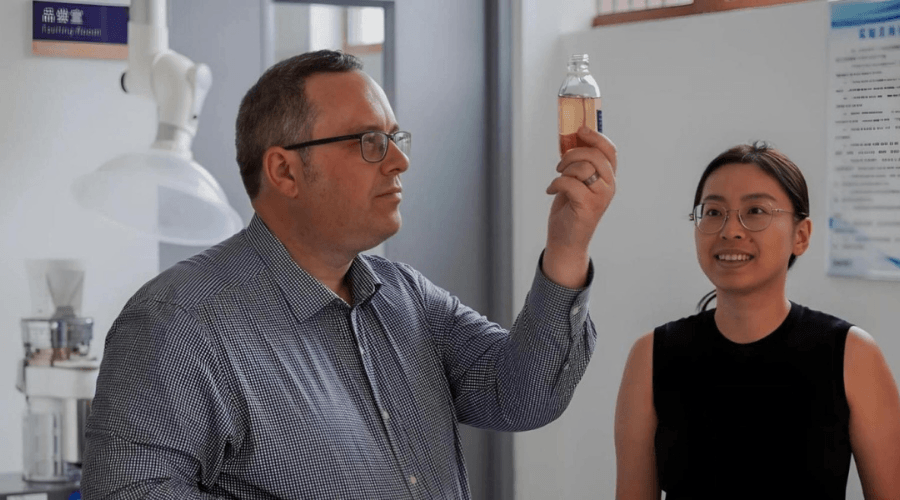
Image: Craig Wallace.
Managing the quality of spirit produced across more than 30 distilleries while maintaining over 100 individual blend recipes demands extraordinary precision and discipline.
"I would argue that this makes it even more complex than a Single Malt."
Every bottle must deliver the same flavour profile year after year, despite natural variations in raw materials, maturation and production.
Looking beyond whisky production itself, Wallace also sees significant opportunities emerging in global markets.
India, one of the world's largest whisky markets, is entering a particularly interesting period following the UK-India Free Trade Agreement.
While Scotch continues to grow, Wallace believes producers must avoid assuming tomorrow's consumers will behave like previous generations.
"We must be mindful of the new generation of consumers and be flexible to meet their tastes too."
He also points to the rapid growth of Indian Single Malts as evidence that regional diversity and local identity are becoming increasingly important to consumers.
Looking ahead, Wallace believes producers should prepare for a marketplace where flexibility becomes a competitive advantage.
"I think giving people options on format, flavour and price will be critical."
For producers attending IBWSS, the message is clear.
Creating successful spirits brands isn't simply about producing exceptional liquid.
It requires building production systems that protect quality, understanding local markets, developing products consumers genuinely want, and creating supply chains capable of delivering consistency at global scale.
Also Read:
IBWSS UK 2027: A New Chapter for the Global Beverage Business Begins in London
Beyond Glass: What the Bulk and Private Label Trade Needs to Know About Alternative Packaging Now
Get Your Visitor Tickets Here and join the bulk and private label industry in London on March 25-26, 2027. (Trade is free)